Operational coordination
Manage time, merchandise, contributors, and process handoffs with clear ownership.
Career Readiness
Manager feedback and professional evidence translated into a focused development plan.
Manage time, merchandise, contributors, and process handoffs with clear ownership.
Use evidence to frame a focused question and recommend practical action.
Match the level of detail to the reader and confirm the decision and owner.
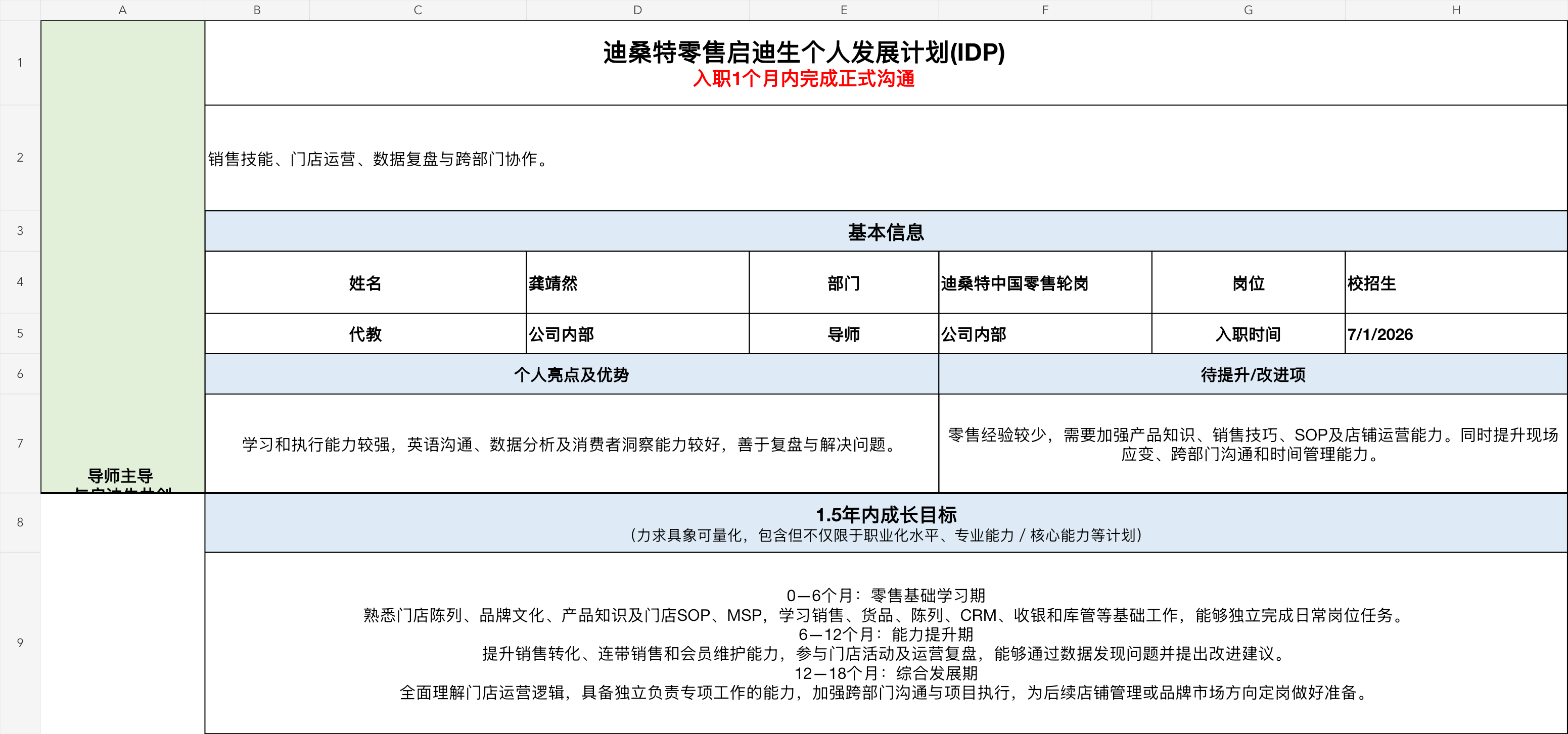
On August 3, 2026, I completed an Individual Development Plan review with my manager and mentor at DESCENTE China. We examined the progress of my Management Trainee rotation, the knowledge I was building in retail and merchandise work, the areas where I needed more experience, and the direction I wanted to pursue after the program. The review translated those topics into three practical priorities.
First, I need to treat each rotation as a structured learning assignment rather than a sequence of tasks. Before entering a function, I should identify the decisions that team owns, the information it uses, and the handoffs that create delays or errors. A short weekly record of questions, decisions, and observations will help me compare functions and retain what matters when I move to the next rotation.
Second, retail and merchandise judgment must combine numbers with what happens on the floor. Sales and inventory data can show movement, gaps, and exceptions, but they do not explain every cause. Product presentation, consumer questions, store routines, timing, and local conditions provide the context. My role is to connect those signals and frame a focused business question before proposing action. I will begin with small analyses that the team can test and review.
Third, I should use the remaining rotations to prepare deliberately for placement after the program. My development plan points toward work that combines merchandise or retail insight with project coordination and decision support, while identifying the gaps that would limit me in that role. I will ask for end-of-rotation feedback, document one contribution and one development need from each assignment, and track results where the team already has an approved measure. The review made my next step clearer: build operating knowledge first, use data to support a decision, and earn broader responsibility through dependable follow-through.
My completed Individual Development Plan identifies learning agility, execution, English communication, data analysis, consumer insight, and problem-solving as strengths. It also sets clear development priorities: product knowledge, consultative selling, store procedures, retail operations, situational response, cross-functional communication, and time management.
The first six months focus on retail foundations. I am building product and brand knowledge while learning sales, merchandise handling, display, customer relationship management, cashiering, inventory, and the routines required to complete daily work independently. From six to twelve months, the focus shifts toward sales conversion, cross-selling, member relationships, store activities, operating reviews, and using data to identify problems and recommend improvements.
From twelve to eighteen months, the plan expands toward full store operations, ownership of a focused project, stronger cross-functional execution, and preparation for a future role in store management or brand marketing. The learning structure follows a 70/20/10 model: most development comes from rotation work, supported by regular coaching and formal training. I will use the plan as a working reference and review progress through specific observations, feedback, and operating results.
The work I want to do requires strong operational coordination, sound analysis, and clear communication with the people responsible for execution. My past roles have shown me that these skills are most useful when they support the same business decision.
At Fanatics, operational coordination meant managing time, merchandise, contributors, and process handoffs. Seasonal product launches connected warehouse samples, shoot planning, models, key visuals, retouching, product-detail pages, and mini-program listing. Taking responsibility for listing and documenting the process in an SOP taught me that execution depends on clear ownership and reliable follow-up. My current comprehensive rotation at DESCENTE China gives me a broader setting in which to understand retail and merchandise operations before I receive a permanent assignment.
At Tencent, I learned to use evidence to support a decision. I used Excel and SPSS to examine Bundesliga viewing data, sponsor-rights performance, and team workload. My reports on cycling consumers, Arc'teryx, Formula One market development, and World Cup sponsorship also developed my research discipline. My next step is to connect sales, inventory, consumer, and campaign data with concise recommendations. I will use a one-page monthly insight memo and limit each analysis to three priorities.
Clear communication kept that work moving. Broadcast work required communication with European event headquarters, advertisers, and production colleagues. Fanatics campaigns and launches required coordination with internal teams, platforms, models, creators, and event partners. These experiences taught me to adjust the level of detail to the person receiving the message and to confirm both the decision and the owner.
I want to become a manager who understands daily operations, uses data to identify the priority, and helps colleagues act on it. The next stage of my development is to practice these skills together during each DESCENTE rotation and ask for direct feedback on the result.
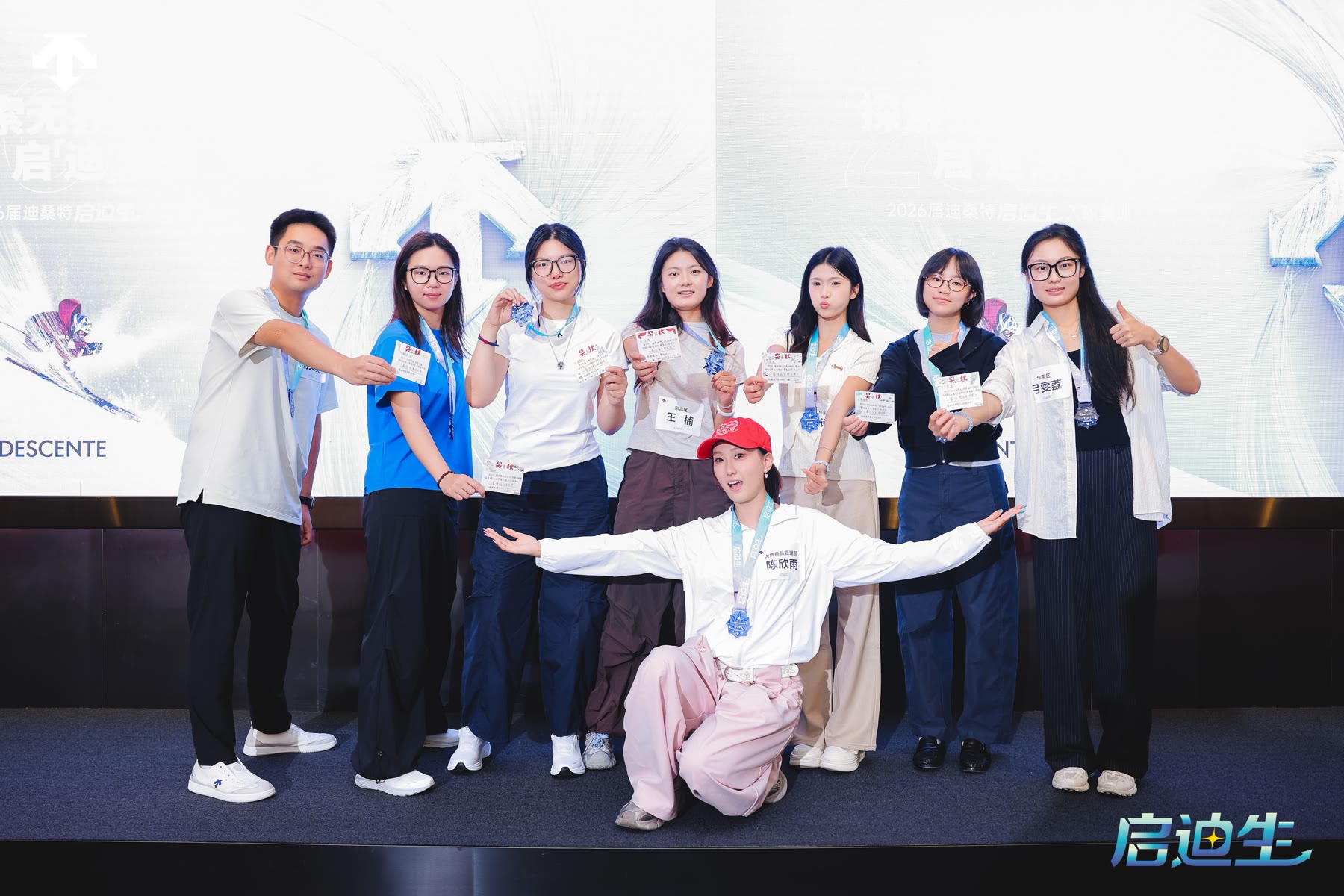
The meeting record and workplace context connect my reflection to my current Management Trainee role.
View professional materials